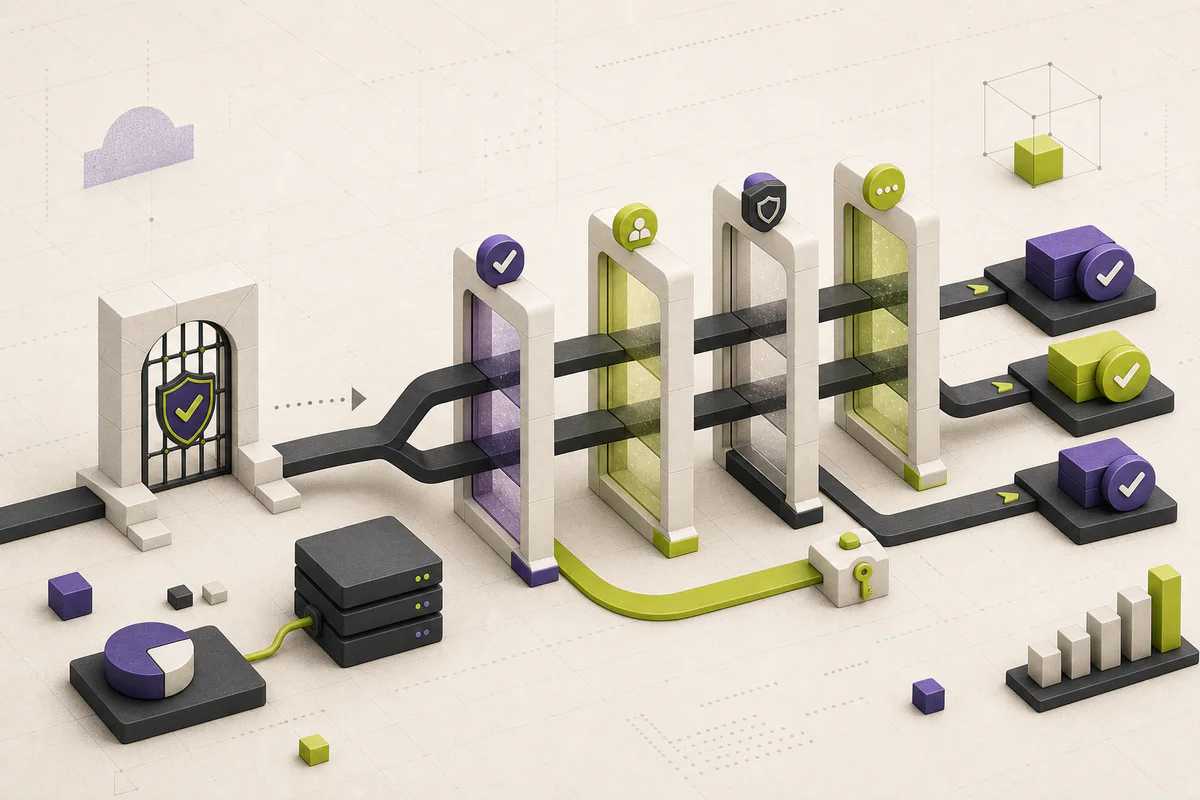
Use GitHub's conversion as a starting point, then compare the active rules for a representative branch before retiring any familiar protection workflow.
GitHub now lets repository administrators convert an existing branch protection rule to a repository ruleset from the repository settings. The practical benefit is clear: teams do not have to recreate every familiar requirement by hand just to start using rulesets.
That convenience should not turn into a blind migration. Branch protection rules and rulesets can apply together, and overlapping rulesets are aggregated. A conversion is therefore the right time to check the policy that contributors will actually encounter at the merge box or push prompt.
What GitHub says the conversion carries forward
In Settings → Branches, locate a classic entry under Branch protection rules and select Convert to ruleset. GitHub says the tool maps the existing configuration into equivalent ruleset rules, including required pull-request reviews, required status checks, and push restrictions.
The announcement says the feature is available for repositories where rulesets are available. Confirm that your plan and repository visibility support the ruleset type you need; some capabilities, such as push rulesets for private or internal repositories, have plan-specific availability.
Why the result can be stricter than the old rule
A classic branch protection setup can apply only one matching protection rule at a time. Rulesets behave differently: several rulesets can target the same branch, their requirements are combined, and the more restrictive version of a duplicate rule wins. GitHub also documents that rulesets layer with branch protection rules.
That makes rulesets useful for separating a baseline policy from a release-branch policy. It also means a converted rule can expose an old organization-level requirement, a second repository ruleset, or a bypass configuration that the team had not considered in the previous workflow.
A low-risk conversion checklist
Start with one non-critical repository or a branch that has a repeatable pull-request test. Save the current rule settings and name the expected result before changing anything. A screenshot is helpful, but a short written list of exact status-check names, review count, allowed bypasses, force-push policy, deletion policy, and branch pattern is easier to compare later.
After conversion, inspect every active rule that targets the branch. Run a test pull request with the required checks, and use an account that represents a normal contributor rather than an administrator. If you use release branches, test their patterns separately: a policy that is correct for main can be disruptive when a wildcard also matches a release or hotfix branch.
- Record the current branch pattern and every enabled protection before conversion.
- List the exact names and expected sources of required status checks.
- Check who can bypass the converted ruleset and whether that differs from the prior rule.
- Review organization and repository rulesets that also target the branch.
- Open a representative pull request and verify merge blocking, approvals, checks, and administrator behavior.
- Document the owner and rollback decision before applying the same approach elsewhere.
Check status checks and bypasses with real identities
Required checks deserve special attention. GitHub lets rulesets require checks before merging, and the relevant configuration can specify an expected app as the source. Compare the converted rule with the checks your current CI actually reports; a familiar check name alone may not represent the same trust boundary.
Also test the identities that matter in daily operations: a developer, a release manager, an automation bot, and a repository administrator. Rulesets can grant bypass permissions to roles, teams, or GitHub Apps. Do not assume an administrator bypass remains the same just because the old protection rule looked familiar.
When to pause the migration
Pause if the converted policy introduces an unexplained merge block, a missing check, or a bypass that cannot be justified. The goal is not to replace every classic rule this week; it is to make the enforced policy visible and reproducible. GitHub documents ruleset enforcement states, so teams can plan and test a policy deliberately instead of using production merges as the first test.
For a small team, the useful outcome is a concise record of what protects each important branch and who owns exceptions. Once that exists, rulesets can make the policy easier to layer and manage. Without it, the conversion button may simply move unknown assumptions into a newer interface.
This article explains the practical implications of the primary material below. PatchMemo does not publish vendor copy as editorial coverage and does not accept payment for positive coverage.
PatchMemo independently selects and evaluates the topics it covers. Analysis and recommendations are ours; sources are linked so readers can check the underlying claims. We clearly label sponsorships and affiliate relationships, and neither determines coverage or conclusions.