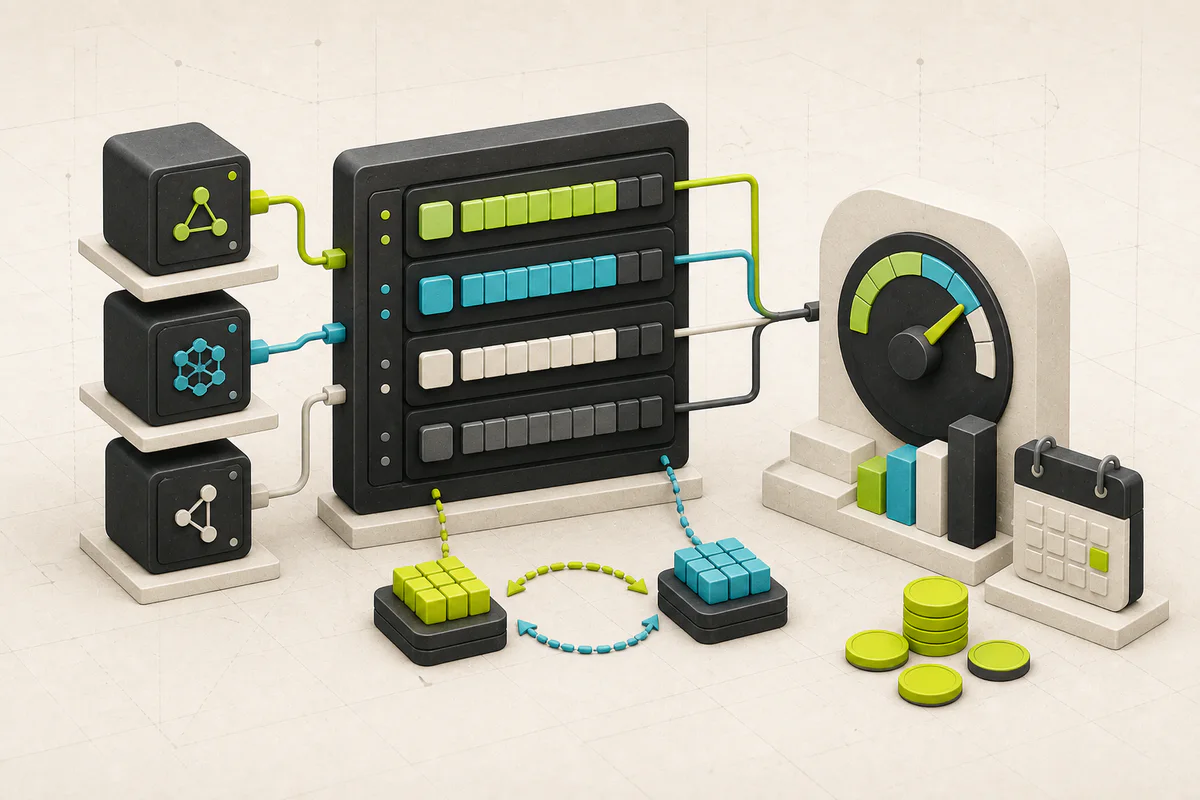
Download the AI usage report each month, compare token mix and credits by model, then investigate the few changes that explain a material spend difference.
GitHub has added a per-model token breakdown to its AI usage report. The report now shows input, output, cache-read, and cache-write tokens next to the AI credits consumed for each model. That is a useful step beyond a total credit figure, but it does not answer a finance or engineering question by itself.
For a team using Copilot Business or Copilot Enterprise, the practical question is not simply which model was expensive. It is whether a change in model choice, prompt size, reuse of context, or the number of active users explains the change well enough to act on it.
What the new report makes visible
GitHub says administrators can download the breakdown from the AI usage page in billing settings. The report is available to Copilot Business and Enterprise administrators and to people using Copilot individually. GitHub's billing reference describes the AI usage report as a detailed per-user view of AI-credit consumption for a period of up to 31 days.
The underlying bill is still measured in AI credits, not raw tokens. GitHub documents one AI credit as US$0.01 and explains that model usage consumes input, output, and cached tokens before being converted into credits. Tokens therefore explain a charge; they do not replace the credit total that is actually billed.
Turn a token report into a cost review
Start with a stable comparison period, such as the same number of business days in two consecutive months. Group the report by model first, then compare the change in credits with changes in input, output, cache-read, and cache-write tokens. A credit increase without a comparable rise in active users deserves a closer look; a larger context window or a switch to a different model may be the explanation.
Do not treat a high token count as proof of waste. Larger inputs may represent a legitimate codebase context, and cache behavior can change when people use an assistant differently. Ask the affected team what workflow changed before setting a policy or restricting a model.
- Record the report period, license count, and active-user count beside the credit total.
- Compare credits and token categories for each model, rather than averaging all models together.
- Flag abrupt changes in input tokens, output tokens, or cache activity for an owner to explain.
- Separate planned experiments and migrations from unexplained usage.
- Keep the exported report with the monthly billing review so a later price or policy change has context.
Use the report to ask better questions
A model with rising input tokens may signal longer prompts, a larger attached context, or a workflow that repeatedly sends similar material. Rising output tokens may reflect broader tasks or a configuration change. Cache-read and cache-write columns add another clue: they can show that context reuse is part of the cost picture, not an invisible implementation detail.
The useful follow-up is narrow. Review a small number of material changes with the people who own the workflow, then decide whether to leave it alone, offer a shorter prompt pattern, move a recurring task to a different model, or set an explicit budget. A blanket ban usually loses useful work while obscuring the real driver.
Limits to keep in mind
The AI usage report is a reporting tool, not a real-time enforcement control. GitHub documents a maximum 31-day period for this detailed report, so organizations that need longer trend analysis should retain regular exports or use their approved reporting process. Access also depends on the account role and plan.
Before using the report for chargeback, verify how your organization assigns work across cost centers, repositories, teams, and individual users. The new token fields increase transparency, but the organization still needs its own agreed rule for allocating shared experimentation and platform work.
This article explains the practical implications of the primary material below. PatchMemo does not publish vendor copy as editorial coverage and does not accept payment for positive coverage.
PatchMemo independently selects and evaluates the topics it covers. Analysis and recommendations are ours; sources are linked so readers can check the underlying claims. We clearly label sponsorships and affiliate relationships, and neither determines coverage or conclusions.